
Choosing the Right Food Colour for Quality and Consistency
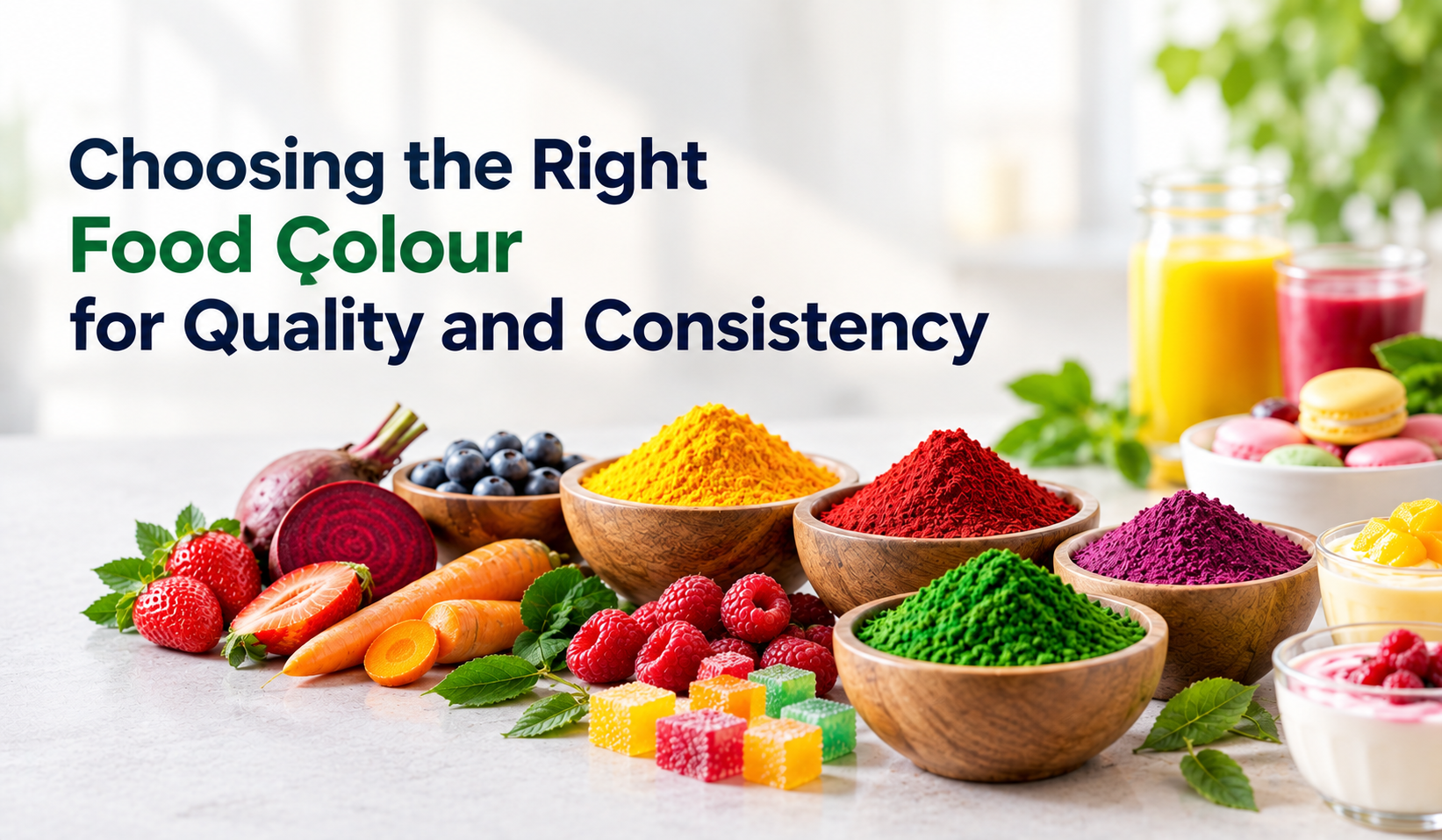
Food colour influences how consumers perceive beverages, confectionery, bakery products, dairy items, sauces, and other foods. The right shade can improve visual consistency and help a product maintain a recognisable appearance across batches. However, selection involves more than choosing an attractive colour. Solubility, application, dosage, stability, and compatibility with the food matrix all matter. Businesses evaluating Food Colour Manufacturers In Ahmedabad should look for clear specifications, consistent quality, and technical understanding. Tanya Exports operates in this product segment, and buyers can use a structured evaluation process before selecting a supplier.
Understanding Food Colour Selection
Food colours come in different forms, and suitability depends on the application. Water-soluble options may suit beverages, while oil-based systems can require different solutions. Some applications also require stability during heating, processing, storage, or light exposure.
Before selecting a colour, manufacturers should define the product conditions clearly. Important considerations include:
- Type of food or beverage
- Desired shade and intensity
- Processing temperature and duration
- Expected shelf life
- pH and moisture conditions
- Packaging and storage environment
A colour that performs well in one formulation may not produce the same result in another, so small-scale trials are useful before full production.
Comparing Food Colours Manufacturers
When assessing Food Colours Manufacturers, buyers should consider more than shade availability. Consistency between batches is important because variations can affect a finished product's appearance.
Documentation also matters. Buyers may need information on composition, recommended usage, specifications, batch details, and applicable compliance requirements.
| Evaluation area | What to check |
|---|---|
| Product range | Suitable shades, forms, and applications |
| Consistency | Batch-to-batch colour performance |
| Technical data | Usage guidance and stability information |
| Quality control | Testing and release procedures |
| Packaging | Protection from moisture, light, and contamination |
| Support | Responses to application-related questions |
Clear specifications can simplify product development and quality management.
Stability and Processing Considerations
Food colour performance can change with heat, acidity, light, oxygen, and other formulation conditions. Selection should therefore consider the complete manufacturing process.
A beverage colour may need to remain evenly distributed during storage, while bakery applications may expose it to high temperatures.
Testing should reproduce the intended production environment, including processing and storage conditions.
What to Look for in Food Dye Suppliers
Businesses searching for Food Dye manufacturers should examine both product suitability and supplier reliability. The objective is not simply to obtain a colour but to find a solution that performs consistently within the intended formulation.
Useful questions to address with a potential supplier include:
- Is the product suitable for the intended food application?
- What dosage range is recommended?
- How does it respond to processing conditions?
- What specifications and quality documents are available?
- Are samples available for formulation trials?
- What packaging and storage conditions are recommended?
Clear answers help teams make decisions based on actual requirements.
Building a Reliable Procurement Approach
Colour selection should form part of quality control. Businesses can establish internal specifications for shade, dosage, application method, and acceptable variation to support consistent production.
Storage also matters. Colouring materials should follow recommended conditions for moisture, temperature, light, and contamination. Stock rotation supports orderly inventory management.
For new formulations, test samples before large-scale purchasing. Real production trials can reveal differences in stability, dispersion, and final appearance.
Frequently Asked Questions
No. Suitability depends on the food matrix, processing conditions, desired shade, stability requirements, and applicable regulations.
Consistent colour helps products maintain a predictable appearance across batches, supporting quality control and consumer expectations.
Assess shade, dosage, dispersion, processing stability, storage stability, and interaction with the complete formulation.
It can. Certain colours may respond differently to acidic or alkaline conditions, so testing within the intended formulation is advisable.
Storage conditions depend on the product. Following recommendations for temperature, moisture, light, and packaging helps protect quality.
Conclusion
Choosing a food colour requires assessment of formulation, processing, stability, documentation, and quality consistency. Rather than selecting solely on shade or price, buyers should evaluate performance under actual manufacturing conditions and establish clear quality expectations. Working with experienced food colour manufacturers in india can support a structured procurement process when technical information and consistent supply are important. The best choice is one that delivers the required appearance while fitting safely and reliably into the complete production process.