
How to Choose the Right Tartrazine Colour for Food Applications
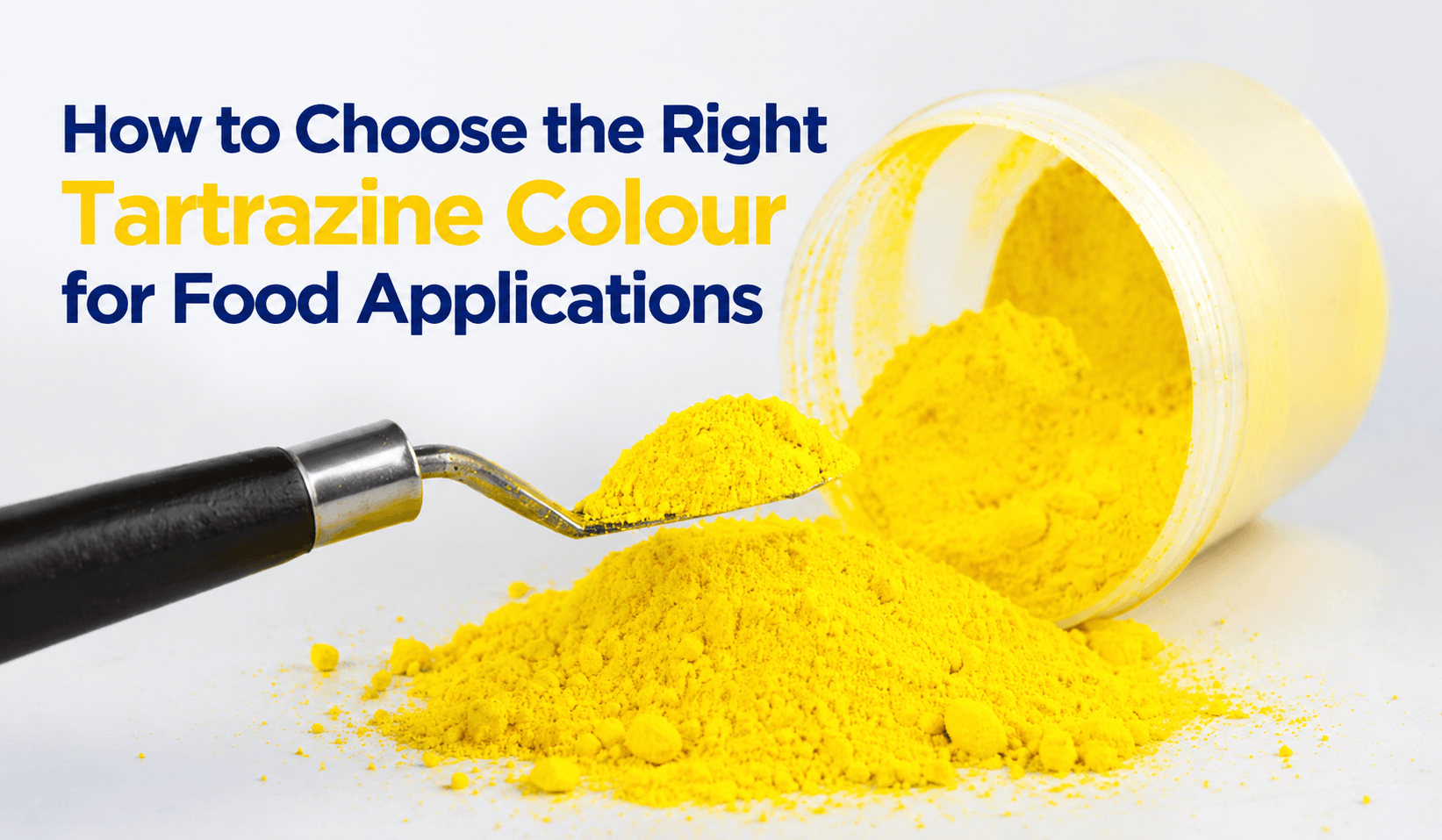
Selecting the right food colour is not simply a matter of choosing a bright shade. Manufacturers need to consider colour consistency, application, regulatory requirements, storage, and the characteristics of the finished product. Tartrazine, a yellow synthetic food colour, is widely used where a stable and recognizable yellow tone is required. Buyers researching tartrazine colour manufacturers often need to understand more than product availability. They need clarity on quality parameters and suitability for their specific application. Tanya Exports approaches this requirement by helping buyers evaluate colour products with practical manufacturing considerations in mind.
Understanding Tartrazine Colour and Its Applications
Tartrazine is commonly identified as Yellow 5 and is used in a range of food and beverage applications. Its value comes from its ability to provide a distinct yellow appearance in suitable formulations.
Depending on the product, it may be considered for:
- Confectionery and dessert preparations
- Beverages and beverage concentrates
- Bakery and processed food products
- Seasoning and dry mixes
- Pharmaceutical and other permitted applications
The appropriate grade and usage level depend on the application and applicable regulations. Acidity, processing conditions, ingredients, and storage can influence the final appearance.
What Food Colour Buyers Should Evaluate
When comparing tartrazine food colour manufacturers, buyers should look beyond price and visual intensity. A dependable supply process should provide consistency between batches and clear product information.
Important factors include:
| Evaluation factor | Why it matters |
|---|---|
| Colour strength | Helps achieve the intended shade with controlled usage |
| Batch consistency | Reduces variation between production runs |
| Solubility | Supports uniform dispersion in the finished formulation |
| Documentation | Helps buyers verify specifications and compliance requirements |
| Packaging | Protects the material during storage and transportation |
| Technical support | Helps address application-specific handling questions |
Clear specifications help manufacturers working with standardized recipes make procurement decisions and reduce avoidable formulation adjustments.
Handling, Storage, and Formulation Considerations
Even a suitable colour requires proper handling. Buyers should follow the supplier's recommended storage conditions and keep the material protected from factors that may affect its quality. Clean, dry storage and appropriate packaging can help maintain product condition during its shelf life.
Formulation teams should test the colour within the actual product matrix. Factors such as pH, heat exposure, concentration, and ingredient interactions can affect the observed shade. Small-scale trials can help identify suitable dosage and processing conditions.
For businesses sourcing from tartrazine manufacturers in gujarat, practical considerations such as production consistency, documentation, packaging standards, and communication can be just as important as the colour itself. A structured evaluation helps buyers choose a supplier that fits their manufacturing process instead of selecting solely on a quoted rate.
Making Supplier Selection More Practical
A systematic purchasing process can reduce uncertainty. Start by defining the application, required shade, expected consumption, packaging preference, and documentation needs. Then compare suppliers against the same criteria.
It is useful to ask:
- Is the product specification clearly stated?
- Can batch-to-batch consistency be demonstrated?
- Is the packaging appropriate for the expected storage period?
- Are relevant technical and compliance documents available?
- Can the supplier clarify application or handling requirements?
Buyers should distinguish technical suitability from regulatory acceptability. Requirements can differ by market and application, so permitted use, dosage, and labeling should be confirmed before commercial production.
Frequently Asked Questions
No. Its suitability depends on the product category, formulation, intended use, and regulations applicable to that market. Testing should be carried out before routine production.
Follow the supplier's specified storage instructions. In general, colour materials should be kept in suitable packaging and protected from adverse environmental conditions such as excessive moisture or heat.
Consistent colour strength helps manufacturers maintain a predictable appearance and avoid repeated adjustments to recipes or processing conditions.
Yes. Specifications and relevant compliance documentation can help purchasing and quality teams assess whether a material is appropriate for their intended application.
A trial is advisable, particularly when introducing a new source or formulation. It can reveal how the colour behaves under actual processing conditions.
Conclusion
Choosing a suitable colour requires a balance of appearance, consistency, handling, documentation, and application requirements. A careful comparison can help food manufacturers reduce formulation uncertainty and maintain dependable production standards. Businesses evaluating tartrazine manufacturers in india should therefore consider technical fit and supply reliability alongside commercial factors. The right sourcing decision begins with clear requirements, product evaluation, and testing within the intended application.